
HELPING YOU TAKE THE NEXT STEP
What We Treat
Improve your quality of life and enhance your overall health and wellbeing with a wide variety of treatments
Improve your quality of life and enhance your overall health and wellbeing with a wide variety of treatments
Treating hips is our favourite – often patients come in with back or leg pain and then are surprised when we identify the root cause as the hip. It affects your gait, running style, working postures and even your sleep.
The ball and socket joint is designed for stability but it needs strong muscles to do this. You also need a healthy range to enable you to run, do up your shoes and get out of the car or hurdle!

Common Symptoms include
Think what activities you are unable to do comfortably, putting on socks, stairs, lifting etc
We will assess your range, strength and function and look at specific hip tests to identify the cause. Treatment may include manual therapy, massage, acupuncture, strapping, Shock wave therapy etc. We will always discuss best management with you. And if further intervention is needed we have an excellent network of MRI Scan departments and Consultants to continue your care.
Shoulder pain is often activity and age related.
The shoulder’s ball-and-socket joint gives you great range of motion, but it comes at the expense of stability. The shoulder joint gets dislocated more often than any other joint in the body. And repeated stress from the way you use your shoulders at work or playing sports can lead to tears and other injuries. Shoulder pain can result from a stiff spine or even from an old ankle injury – our physios are like detectives working through your body clues! Treatment may include manual therapy, massage, acupuncture, strapping, Shock wave therapy etc. We will always discuss best management with you.

Symptoms you should get checked
Injuries Include:
Early diagnosis prevents symptoms getting worse impacting on your lifestyle. We will need to look at your shoulder, spine and scapula and perform specific tests to identify the cause. Early management allows you to feel confident of what you can do to help it get better. Treatment may include manual therapy, massage, acupuncture, strapping, Shock wave therapy etc. We will always discuss best management with you.
Because use our knees for so many activities throughout the day, knees are one of the most injured joints. Everyone has the occasional ache or pain; but don’t ignore symptoms in your knees.
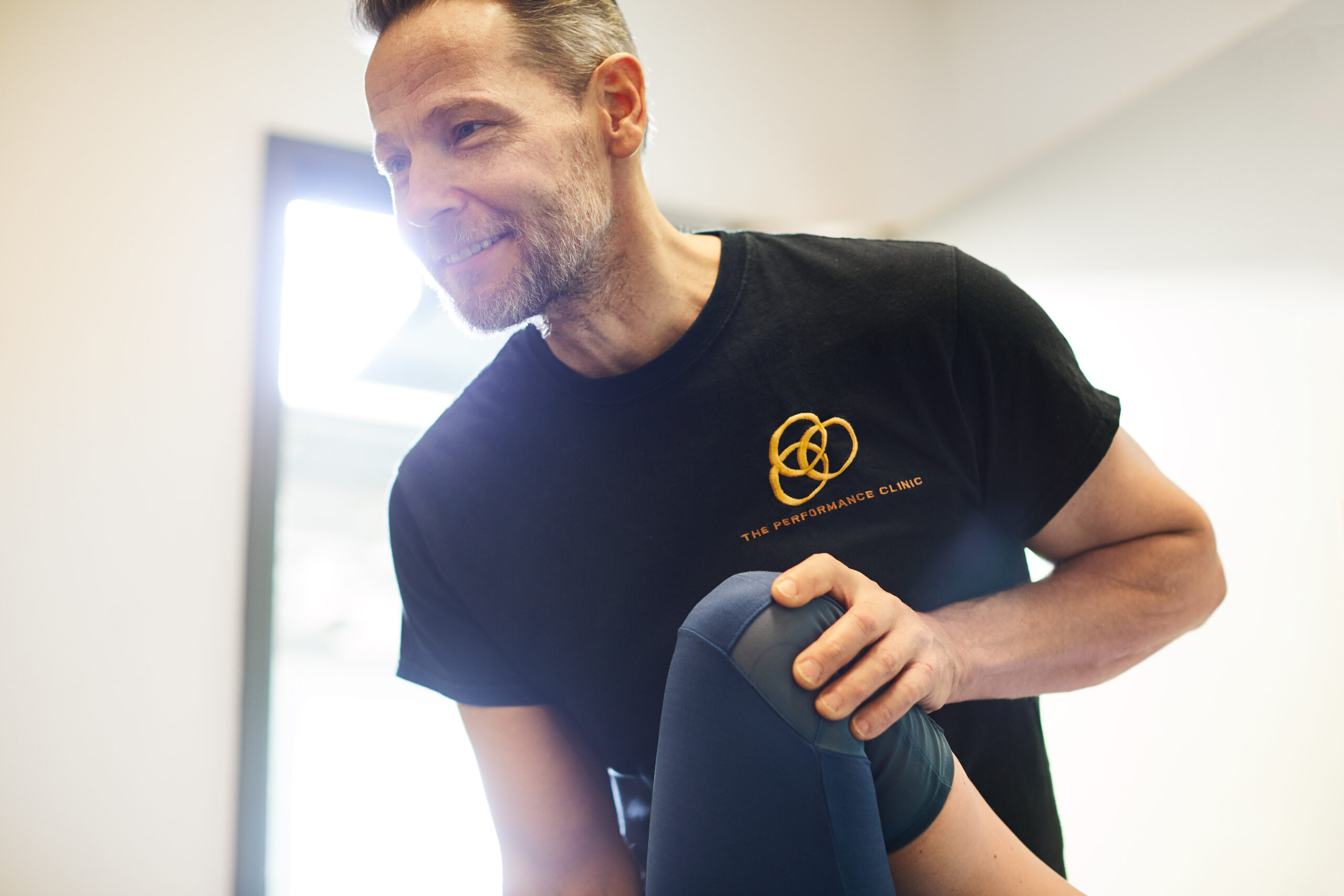
What are common Knee symptoms that you should get a physio to assess?
Common Injuries:
The Performance Team love treating knees, we ensure we look at your whole body as knee pain can often impact on other parts of your body. We aim to get you pain free with our treatment as quickly as possible and get you moving well and back to doing the things you love. But if your knee injury requires further investigations we have an excellent network of consultants and MRI departments to escalate your pathway of care. Treatment may include manual therapy, massage, acupuncture, strapping, Shock wave therapy etc. We will always discuss best management with you.
The foot and ankle joints are made up of numerous bones that are intricately shaped to provide the entire body a stable base to stand on. Strong ligaments and muscles protect the joint and hold these bones together. Pain within the foot and ankle decreases this stable platform impacting on your whole body.
Often people present with back pain or hamstring strains a few years after an ankle sprain that had not been treated. Our physios will ensure a complete rehabilitation package to ensure you are pain free and can return to your activities safely. Treatment may include manual therapy, massage, acupuncture, strapping, Shock wave therapy etc. We will always discuss best management with you.
Common Injuries can range from minor sprains and strains to more severe fractures and dislocations. Understanding the different types of foot and ankle injuries, their symptoms, treatment options, and prevention strategies is crucial for proper management and recovery.

Ankle Sprains:
One of the most common foot and ankle injuries is an ankle sprain. An ankle sprain occurs when the ligaments that support the ankle joint are stretched or torn. This injury often happens when the foot twists or rolls inward, causing the ligaments on the outside of the ankle to become injured. Ankle sprains can vary in severity, with mild sprains involving minimal tearing of the ligaments and severe sprains involving complete tears or ruptures.
Symptoms of an ankle sprain may include pain, swelling, bruising, difficulty walking or bearing weight on the affected foot, and instability of the ankle joint. Treatment for ankle sprains typically involves rest, ice, compression, elevation (RICE), pain management with over-the-counter medications, and physical therapy exercises to regain strength and stability in the ankle. In more severe cases, a brace or cast may be necessary to immobilize the joint during the healing process.
Achilles Tendonopathy:
The Achilles tendon is a strong band of tissue that connects the calf muscles to the heel bone. The Achilles can degenerate in response to overuse or repetitive stress. This injury is often seen in athletes who participate in activities that involve jumping or running.
Symptoms may include pain and stiffness in the back of the heel or lower calf especially in the morning, swelling, tenderness, and difficulty walking or participating in physical activities. Treatment is diverse depending on the cause but can include management strategies, orthotics, acupuncture, ESWT and a progressive loading regime. A biomechanical assessment is also warranted.
Stress Fractures:
Stress fractures are small cracks or breaks in the bones of the foot or ankle that occur due to repetitive stress or overuse. These injuries are commonly seen in athletes who engage in activities that involve repetitive impact. Stress fractures can also occur in individuals with weakened bones, such as those with osteoporosis or suboptimal nutrition.
Symptoms of stress fractures may include pain that worsens with activity and improves with rest, swelling, tenderness, and possible bruising. Treatment for stress fractures typically involves rest, immobilization with a cast or walking boot, pain management and a progressive graded return to activity.
Plantar Fasciitis: This condition involves inflammation of the plantar fascia, a thick band of tissue that runs along the bottom of the foot. It is often characterized by heel pain that is worse in the morning or after periods of rest.
Lisfranc Injury: A Lisfranc injury involves damage to the ligaments and/or bones in the midfoot area. It can occur from a direct impact or twisting motion and may cause pain, swelling, instability, and difficulty bearing weight on the affected foot.
Sadly the largest number of clients accessing physiotherapy is for back and neck pain. This means we have seen lots of different cases and we understand how it impacts your life. Fortunately our team love treating backs and we will guide you through your treatment and rehabilitation. Treatment may include manual therapy, massage, acupuncture, strapping, Shock wave therapy etc. We will always discuss best management with you.

Symptoms you should get assessed:
Aside from trauma from sports, falls or car accidents sedentary postures such as Work postures, and sleeping awkwardly can all contribute to spinal pain. Research suggests that these can play an important part in making the neck structures more sensitive.
Lifestyle Factors Include:
poor quality and quantity of sleep
noticing more muscle tension in your neck
low levels of physical activity
and more stressful periods of life
Research also shows that early intervention yields a better outcome and prevents long term side effects.
Injuries
You don’t realise how useful your elbow is until it starts hurting! Pouring the kettle, opening a jar, typing and the list goes on! And it goes without saying how difficult life is when you cannot use your hand. Early diagnosis is key to prevent the whole upper limb compensating.

Common symptoms you shouldn’t ignore
Common Injuries
Early assessment helps us identify the source of your pain, this may be from faulty technique, lack of conditioning or from your shoulder and spine. Our physios will assess your whole body not just where you feel pain. Treatment may include manual therapy, massage, acupuncture, strapping, Shock wave therapy etc. We will always discuss best management with you.
Scars from trauma or surgery can continue to cause pain, disfigurement, and movement dysfunction years after the incident.
We often treat clients who come in with one issue for example back pain, but through a thorough examination we find the root cause to be a scar that has become embedded, restricted and causing tissues to bind down. And this scar could be from a c section or appeindix etc.
If you have had any cancer surgery, laparotomies, caesarean sections, joint surgery and the list goes on – then we strongly recommend you coming in to see our scar expert.


